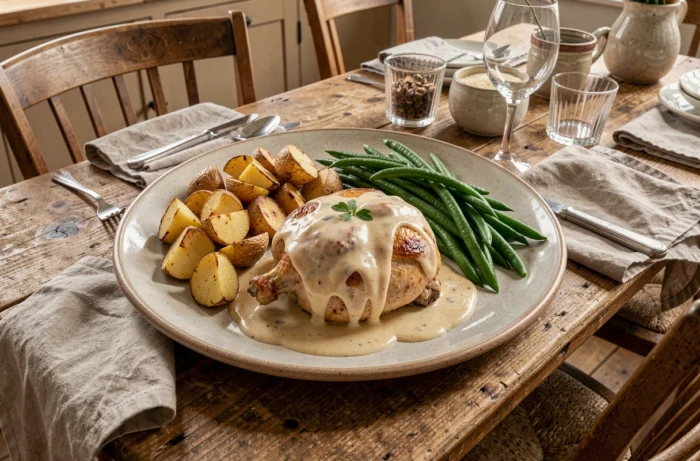
A well-made chicken in cream sauce has a silky sauce, tender meat and an aroma that fills the kitchen. The classic instinct is to serve it with a mountain of rice or pasta. The result is often a tasty meal, but one that feels heavy and monotonous. To really balance the plate, it’s worth giving a little more thought to what you serve with chicken in cream sauce, especially when the recipe already includes mushrooms or other rich ingredients.
Chicken in cream sauce with mushrooms: avoid a monochrome plate
Many chicken in cream sauce recipes include button mushrooms, porcini or chanterelles right in the sauce. The dish already has plenty of soft textures and umami flavors. Adding dauphinoise potatoes or pan-fried potatoes on top just piles on more softness without adding any contrast.
Have you ever noticed that feeling of getting tired of a dish after just a few bites? It’s often a sign that the plate needs freshness or acidity. When the main dish already contains a vegetable cooked in cream, the side dish should bring what the sauce doesn’t: crunch, a touch of bitterness or a hint of acidity.
A good option in this case is to serve a simply steamed or quickly sautéed green vegetable on the side, such as green beans, broccoli or mangetout. Their firm texture and bold flavor contrast with the softness of the sauce. If you’re looking for detailed ideas for what to serve with chicken in cream sauce, the principle is the same: balance the richness, don’t double it.
Seasonal vegetables to serve with chicken in cream sauce
Serving green beans with chicken in cream sauce every time works, but it means missing out on a much wider range of options. Choosing vegetables according to the season completely changes the experience of the dish.
Fall and winter
Cold-weather months offer vegetables that can stand up to a rich sauce without getting lost in it. Braised endives add a bitterness that refreshes the palate. Tender leeks, cooked in chunks with a squeeze of lemon, create a silky contrast that’s still distinct from the cream.
Squash, parsnips and cabbage are also good choices. Roasted butternut squash with a little thyme develops sweet, caramelized notes that pair well with the mild flavor of the chicken. Lightly charred romanesco or cauliflower adds character without making the meal feel heavier.
Spring and summer
Warm-weather vegetables tend to bring freshness. Sautéed zucchini, roasted cherry tomatoes, grilled peppers or even a simple green salad dressed with lemon vinaigrette all work very well. A touch of acidity (lemon, vinegar) in the side dish whets the appetite with every bite, balancing the creaminess of the sauce.
For example, an endive and apple salad combines crunch, bitterness and acidity in one simple dish. This kind of fresh side is especially well suited to a thick sauce.
Starches with creamy chicken: soak up the sauce or add contrast
Starches aren’t just there to fill the plate. They play a specific role, depending on what you’re looking for.
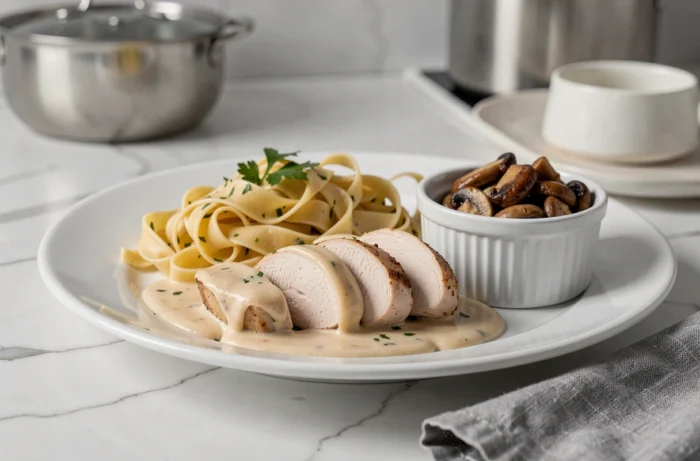
- Basmati rice and pasta (tagliatelle, penne) soak up the sauce, so none of it goes to waste. This is the most indulgent option, but also the richest.
- Steamed or mashed potatoes add substance without soaking up all the cream. They let the sauce coat the meat rather than the starch.
- Whole grains (bulgur, quinoa, spelt) offer an interesting textural contrast. Their nutty flavor and firm bite break up the monotony of a plate full of soft textures. France’s public health guidelines also recommend choosing whole grains for everyday meals.
The pitfall to avoid: serving a starch as the only side. A plate of chicken in cream sauce and rice, with no vegetables, lacks vitamins, fiber and color. The right balance is one portion of starch and one portion of vegetables alongside the chicken.

How to build a balanced plate around chicken in cream sauce
Rather than listing dozens of ideas, here’s a simple way to get it right. Think of three elements on the plate: protein (the chicken and its sauce), a reasonable portion of starch, and a vegetable that adds freshness or crunch.
Each element has a role: the sauce nourishes, the starch satisfies, and the vegetable refreshes. If one of the three is missing, the plate feels unbalanced. If the sauce already contains a vegetable (mushrooms, caramelized onions), the side vegetable should have a different flavor and texture to avoid repetition.
In practice, that means combinations like these:
- Chicken in cream sauce with mushrooms, basmati rice, steamed green beans with a squeeze of lemon
- Chicken in tarragon cream sauce, fresh tagliatelle, endive and apple salad
- Chicken in mustard cream sauce, crushed potatoes, garlic-sautéed broccoli
- Chicken in cream sauce with leeks, bulgur, grilled zucchini with herbes de Provence
In each case, the side vegetable is different from the one in the sauce. That small contrast makes the meal more interesting to eat.
Seasoning the vegetables: the detail that makes all the difference
Plain steamed vegetables served alongside chicken in cream sauce can taste bland. Seasoning the vegetables with a hint of acidity or herbs (lemon juice, cider vinegar, parsley, chives) creates a real dialogue between the two parts of the plate. It doesn’t take a complicated recipe, just a finishing touch.
Salt alone isn’t enough. A drizzle of olive oil and a few drops of vinegar over steamed broccoli turn an ordinary side into an effective counterpoint to the richness of the cream.
A balanced plate of chicken in cream sauce isn’t about the number of side dishes, but how well they complement one another. One well-chosen, well-seasoned vegetable does more than three starches piled side by side.