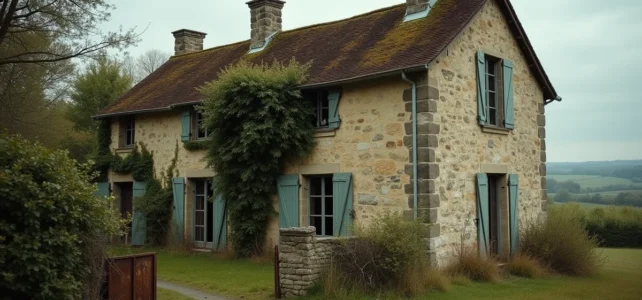
The transfer of abandoned houses for free or for a symbolic euro remains legally possible in 2026. The mechanism has not fundamentally changed, but the access conditions have significantly tightened since 2024, turning what seemed like a windfall into a long and costly administrative process.
Manifest abandonment procedure and municipal takeover: what has changed since 2024
Prefectures have accelerated the dissemination of practical sheets encouraging municipalities to more systematically initiate the manifest abandonment procedure. The stated goal is twofold: to combat vacancy and to regain control over properties that degrade the urban or rural fabric.
Specifically, a municipality that identifies a clearly abandoned property can initiate a procedure for verification, followed by a takeover after formal notice to the owner. If the owner does not respond within the deadlines, the property is integrated into the municipal domain. This takeover involves a municipal decree, a parcel inquiry, and a simplified declaration of public utility.
We observe that this acceleration reduces the margin for any informal acquisition. An individual who spots an abandoned house cannot directly acquire it from an absent owner: the municipality now has priority to initiate the procedure and decide the fate of the property. Finding all offers on EuropImmo allows for identifying properties already recognized in this process.
The tightening does not only concern properties without an owner in the strict sense. Vacant estates managed by the State (Domaines) are also subject to faster processing, reducing the window during which a property remains in an exploitable legal gray area.
Transfer for a symbolic euro: the conditions that advertisements do not detail
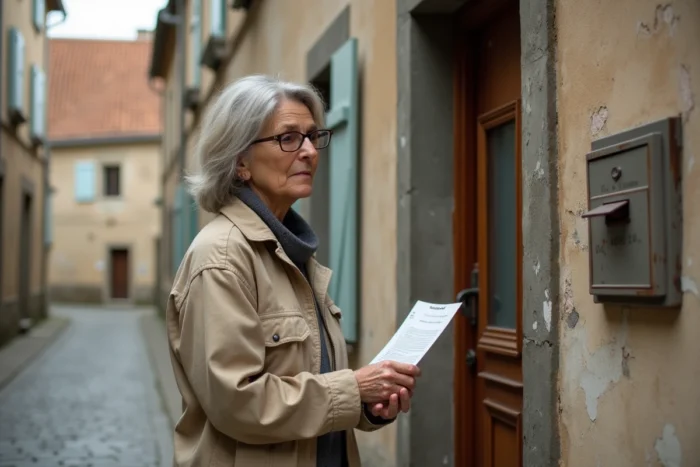
When a municipality transfers a property for a symbolic euro, it is not giving a gift. It is transferring a liability. The transferee generally commits to several cumulative obligations:
- Establish their primary residence in the property for a minimum duration, often set between five and ten years, under penalty of a resolutory clause.
- Carry out necessary renovations within a constrained timeframe, usually two to three years after signing the deed.
- Bear all notary fees, mandatory technical diagnostics, and taxes related to the transfer, even at a symbolic price.
The primary residence clause locks in any rental investment strategy. This is not a detail: most properties transferred for a symbolic euro are located in areas experiencing demographic decline where the post-renovation market value remains modest. The financial calculation only makes sense for a household willing to settle permanently in the concerned area.
Renovation budget for an abandoned house: the true cost of a free property
A property abandoned for several years almost always accumulates serious structural issues: roof repairs, damaged framework, completely redoing utilities (water, electricity, sanitation), and sometimes problems with dry rot or asbestos. The renovation budget often exceeds the final market value of the property, especially in rural areas where the price per square meter remains low.
Even before signing, a complete technical diagnostics file is mandatory. It includes structural diagnosis, asbestos detection, lead diagnosis for buildings built before 1949, and the energy performance diagnosis (DPE). For a severely degraded property, this file can reveal compliance costs that transform the project.
Renovation aids available in 2026
Several programs remain accessible to cover part of the renovation budget. MaPrimeRénov’ covers a fraction of energy performance work, subject to resource conditions and the nature of the work. Anah grants for unworthy or severely degraded housing can complement financing. Some local authorities add local subsidies as part of their revitalization policies.
We recommend estimating the complete financing plan (acquisition + notary + diagnostics + work) before submitting a file to the town hall. A symbolic euro plus two hundred thousand euros of work is not a free operation, it is a heritage investment in a specific territory.
Identifying the owner of an abandoned house in France: land registry and property searches
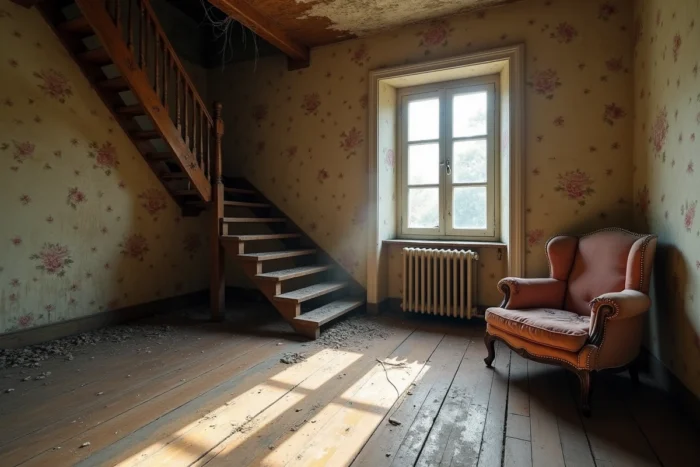
Any acquisition process begins with identifying the owner. The land registry, accessible at the town hall or online via cadastre.gouv.fr, provides parcel references and the name of the last registered owner. This information is not always sufficient: unreported deaths, complex joint ownership, owners who have moved abroad.
The property publication (formerly the land registry) allows verification of the status of transfers and charges on the property. A notary can conduct these searches for a fee. If no owner can be identified, the property falls into the category of properties without an owner, and only the municipality can initiate the takeover.
Contacting the town hall directly remains the most effective reflex. Town hall secretariats in small municipalities often know the history of abandoned properties in their area and can indicate if a procedure is already underway or feasible.
Free abandoned house in 2026: a viable project under strict conditions
Strictly speaking, there is no such thing as free in real estate, even for a derelict property. Notary fees on a transfer for a symbolic euro, diagnostics, renovation work, and any back property taxes constitute an unavoidable base of expenses.
The project remains viable for a specific profile: a household with sufficient savings or borrowing capacity for the renovations, willing to commit to a primary residence in a rural area for several years, and capable of managing a heavy renovation project. For others, the free abandoned house remains more of a media myth than an accessible opportunity.