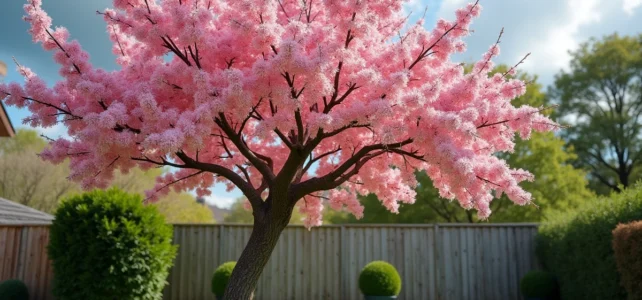
We’ve all seen that pile of albizia logs at the back of the garden after a felling, with the immediate question: is it worth burning it in the stove? Albizia is a fast-growing ornamental tree, very common in gardens in the south of France. However, its qualities as firewood are far from obvious, and its planting requires precautions that many homeowners discover too late.
Roots and planting distance: the constraint that gardeners underestimate
Before even talking about combustion, let’s discuss the problem that is the most expensive to correct. Albizia roots require a distance of at least 8 to 10 m from buildings, including foundations, terraces, and sewage systems. It is often planted too close to the house to enjoy its shade, and the damage appears a few years later.
The tree grows quickly, and its root system keeps pace. Pruning specialists in Provence also remind us that topping is now prohibited on a mature albizia. The recommended technique is a gradual reduction on the sap flow, to avoid rot and breakage of the main branches. A brutal topping often leads to the tree’s decline in the medium term.
Those wondering how far to plant an albizia for firewood will find concrete guidelines on managing this tree before felling. Because the choice of the initial location largely determines the ease of maintenance, and even the quality of the wood that will be recovered later.
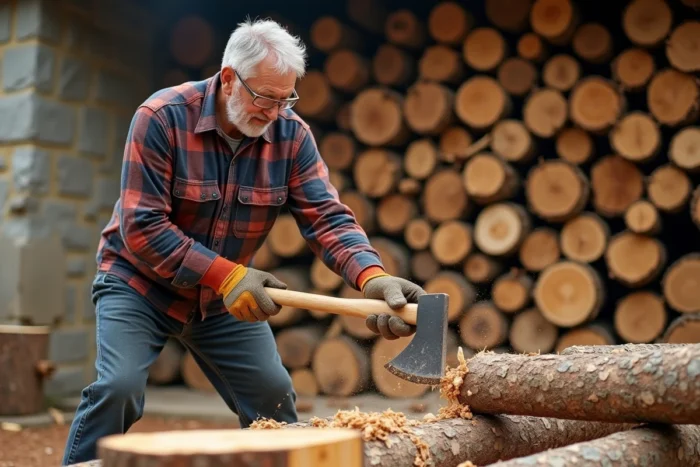
Albizia as firewood: a combustion too quick to heat
Let’s be direct: albizia is not a good primary firewood. Its density is low, its structure porous, and the combustion resembles a straw fire. The flame is bright but very brief, without producing lasting embers. In practice, the fireplace needs constant reloading without ever achieving stable heat.
Its calorific value is significantly lower than that of oak, about a third less per ster. In practical terms, you need to burn much more volume to achieve the same thermal result as with a dense wood like beech or hornbeam.
Chimney soiling and creosote
The porous structure of albizia wood not only poses a yield problem. It also promotes accelerated soiling of chimney flues and creosote deposits, especially if the wood is not perfectly dry. These deposits increase the risk of flue fires, a real danger that user feedback regularly confirms.
If it is used nonetheless, it is only as kindling or as an occasional supplement, mixed with hard woods. Burning it alone in a stove or insert to get through the winter is a poor strategy.
Drying albizia: why two years is not always enough
Drying is the minimum condition to make this wood somewhat usable. We’re talking about a minimum of 24 months to drop below the 20% moisture threshold. Feedback varies on this point: depending on storage conditions (ventilation, exposure, covering), some loggers find that this timeframe is insufficient, especially in humid regions.
- Store the split wood elevated, protected from rain but with good air circulation on the sides. A pile placed on the ground against a wall retains moisture.
- Check the moisture content with a tester before burning. Albizia wood over 20% will produce a lot of smoke and quickly clog the flue.
- Split the logs quickly after felling. Albizia wood dries poorly in large sections due to its fibrous and irregular structure.
Drying will not improve the calorific value of the wood; it will simply prevent the most serious problems (excessive smoke, soiling, poor combustion).
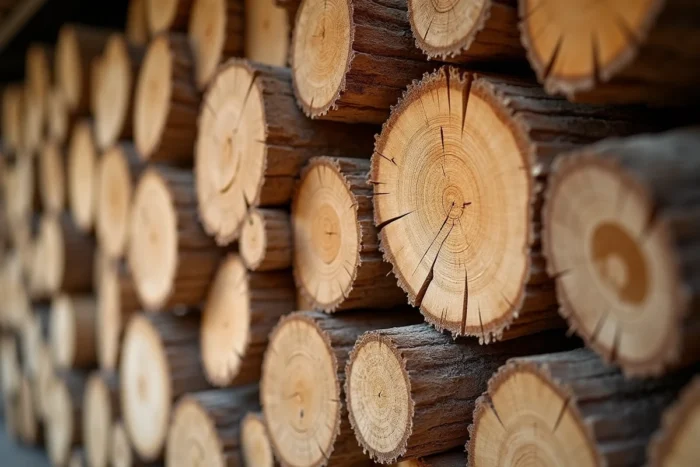
Valuing albizia wood beyond heating
Rather than forcing a use for which it is not suited, we can derive real benefits from felled albizia by transforming it into BRF (fragmented branch wood). Ground into chips, it becomes an excellent mulch for flower beds and vegetable gardens.
Albizia is part of the Fabaceae family, like acacias. Its chipped branches enrich the soil with nitrogen over time as they decompose. It is a more useful mulch in the garden than in the fireplace, especially for the poor or sandy soils of southern France.
Albizia in urban environments: a role as a natural air conditioner
Recent outreach work describes albizia as a particularly effective tree against urban heat islands. Its light foliage creates a ventilated shade that significantly reduces the perceived temperature at ground level, without requiring any special sanitary treatments.
This role as a natural air conditioner during heatwaves explains why some municipalities continue to plant it in alignment, despite its classification as a potentially invasive species in several regions of Europe. Some towns now discourage its planting near sensitive natural areas.
- Check local regulations before planting an albizia, especially in Natura 2000 areas or near waterways.
- Prefer less suckering varieties if the goal is purely ornamental or climatic.
- Plan a management strategy for the tree from the outset (gentle pruning, distance from buildings, anticipation of future felling).
Albizia remains an endearing tree for those who accept its limitations. As firewood, it can be a stopgap but does not replace a dense wood. As a garden tree, it provides real benefits as long as planting distances are respected and brutal pruning is avoided. It is better to grind it into mulch than to stubbornly insist on burning it to heat the house.