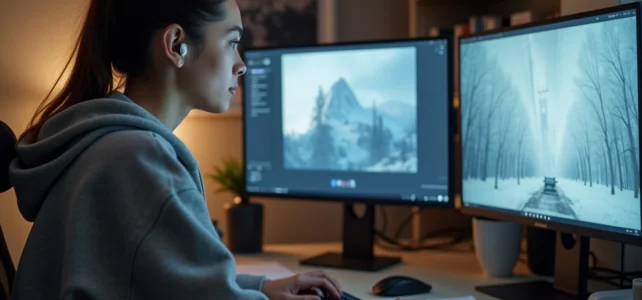
A vidcap is a still image captured from a video stream. The term, a contraction of “video capture,” refers to both the technical process and the resulting file. In France, this practice has been structured around production and distribution tools that transform the way visual content is created, shared, and reused by both businesses and independent creators.
Vidcaps and the visual production chain: how automated extraction changes things
Manually extracting still images from a video requires watching the stream, identifying the relevant moment, and then exporting the capture in a usable format. This work, long considered artisanal, involved editors or graphic designers for hours on a single project.
The arrival of software solutions capable of automatically detecting relevant visual excerpts has shortened this step. Algorithms analyze contrast, sharpness, frame composition, and the presence of faces to propose a selection of captures without human intervention.
Understanding the phenomenon of vidcaps in France involves this technical shift: video capture is no longer a byproduct of editing but a fully-fledged link in the visual content production chain.
French companies producing corporate videos, online shows, or tutorials now exploit every minute of footage to generate dozens of still images. These images feed social media, product sheets, newsletters, and internal image banks.

AI tools applied to vidcaps: transcription, subtitling, and reformatting
Image capture is just one part of the process. French vidcap solutions now integrate complementary functions that enhance the value of each excerpt.
- Automatic transcription: the audio from the source sequence is converted into text, allowing written context to be associated with each capture and improving the images’ SEO
- Generation of synchronized subtitles, directly integrable into short formats intended for social platforms
- Adaptive reformatting: the same vidcap is adapted into multiple ratios (square, portrait, landscape) to meet the display constraints of each distribution channel
INSEE notes that by 2025, French companies will have caught up with their European counterparts in AI usage, even surpassing the European average for organizations with 250 employees or more. This accelerated adoption is concretely reflected in image-related professions: visual post-production is one of the first areas where AI automation generates measurable time savings.
Image quality and technical limits
A vidcap taken from a low-resolution compressed video remains a low-quality image, regardless of the software used. The resolution of the source file determines the final quality of the capture. Productions shot in high definition or 4K provide usable excerpts for print or large format display.
AI upscaling tools improve apparent sharpness but do not create detail absent from the original file. For professional use, filming with the intention of extracting vidcaps requires careful attention to lighting, stabilization, and encoding rate right from the shoot.
Distribution and integration of vidcaps into a content strategy
Producing vidcaps is only worthwhile if these images find their place in a coherent distribution circuit. Two uses dominate the French market.
The first concerns the reuse of existing video content. A one-hour show generates several hundred usable captures. Selecting the most impactful ones to illustrate an article, a post, or an advertising campaign effectively multiplies the lifespan of an initial video investment.
The second relates to visual monitoring and documentation. Companies that monitor their brand image collect vidcaps from media, social networks, or live streams to analyze how their products appear in uncontrolled contexts.

Vidcaps and image rights in France
Extracting an image from a video does not exempt one from respecting image rights and copyright. Each vidcap inherits the legal status of the source video. A capture taken from a television report remains subject to the rights of the publisher, even if it circulates outside its original context.
In France, the regulatory framework for video surveillance also governs certain automated captures. Companies that extract vidcaps from internal camera feeds must comply with reporting and information obligations for the filmed individuals.
French vidcap market: positioning and prospects
The market for video capture solutions in France is structured around two categories of players. On one side, video production studios that offer vidcap generation as a complementary service to editing. On the other, software publishers that provide online tools accessible to marketing teams without advanced technical skills.
Demand is driven by the proliferation of distribution channels. Each social platform imposes its own formats, ratios, and file size constraints. A single shoot can feed a dozen different formats thanks to automated extraction and reformatting.
The integration of AI functions into these tools accelerates the convergence between video production and still image production. The boundaries between these two professions are blurring, and profiles capable of managing a complete chain, from shooting to multichannel distribution, are gaining value in the job market.
Automated video capture does not replace the eye of an art director who chooses the right image. It shifts the creative work: less time spent searching for the right frame, more time devoted to deciding what to do with it.