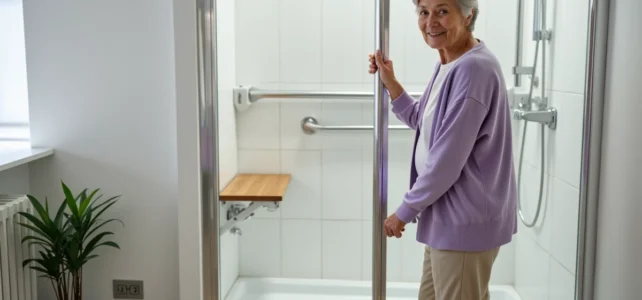
A parent slipping while getting out of the bathtub, a shower with a ledge too high for someone with declining mobility: these situations often trigger an urgent renovation project. The cost of adapting a bathroom for seniors can rise quickly, but several mechanisms allow for covering a significant part of the bill. However, it is essential to know which ones to mobilize, in what order, and with what administrative constraints.
The project management assistant, a necessary step before renovations
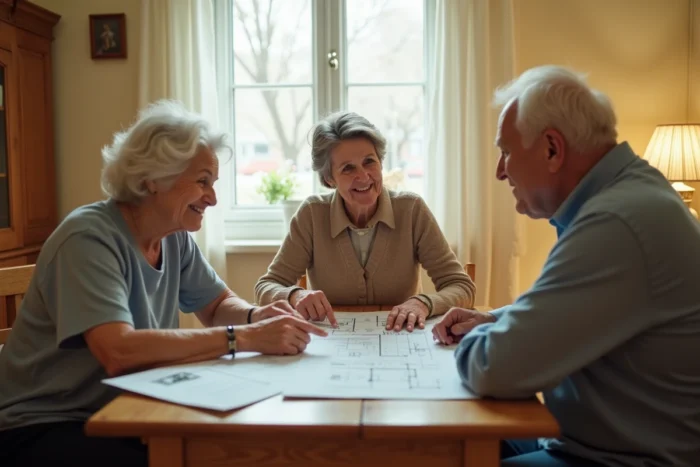
This point surprises many families: even before choosing a contractor, a home assessment by a qualified project management assistant (PMA) is often required. The PMA evaluates the home room by room, identifies concrete obstacles (shower threshold, absence of grab bars, slippery surfaces), and proposes a tailored renovation plan.
In some metropolitan areas like Lyon, this technical support is a prerequisite for accessing MaPrimeAdapt’. The Anah co-finances the PMA mission (between 600 and 800 euros depending on the region). Therefore, one cannot simply submit an online quote: it is necessary to first contact the local France Rénov’ advisory space to initiate this step.
The PMA can also be accompanied by an occupational therapist, which changes the game. An occupational therapist identifies needs that neither the plumber nor the family see: height of the sink, positioning of the thermostatic mixer, width of passage for a potential wheelchair. If one wonders which aid for adapting a bathroom for seniors is the most suitable, this initial assessment concretely guides towards the right mechanisms.
MaPrimeAdapt’: actual ceilings and coverage rates
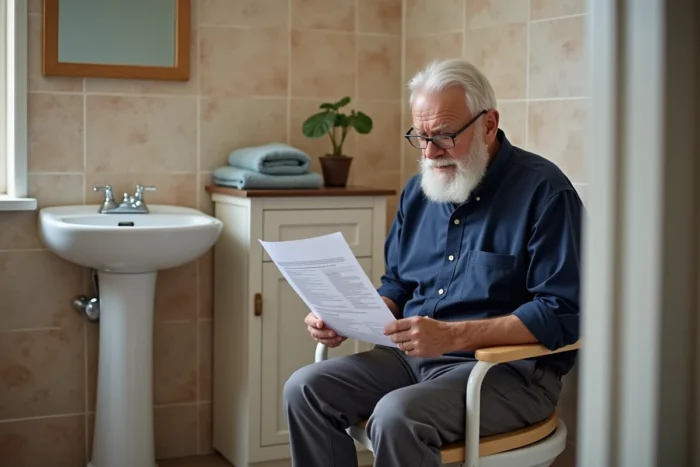
MaPrimeAdapt’ is the central lever for financing the adaptation of a senior bathroom. The scheme, operational since January 2024, covers between 50% and 70% of the renovation costs depending on the household’s resources. The Anah aims to adapt 41,000 homes for the home care of elderly or disabled individuals by 2026.
Who is eligible
The scheme is aimed at owner-occupiers, co-owners, and tenants in the private sector. The conditions relate to age (60 years and older with loss of autonomy) or disability status, and to the income ceilings set by the Anah.
Renovation works covered in the bathroom
This refers to concrete modifications:
- Replacing a bathtub with a walk-in shower with non-slip flooring and an integrated seat
- Installing grab bars, thermostatic mixers, and appropriate lighting
- Widening the door for wheelchair access, installing an adjustable-height accessible sink
- Motorizing shutters or installing a lighted pathway if the project includes the access corridor
The preparation of the file must go through a France Rénov’ advisory space, which verifies eligibility and directs to a qualified PMA. Starting the renovations before receiving approval from the Anah forfeits the benefit of the aid.
Combining multiple aids to reduce out-of-pocket expenses
MaPrimeAdapt’ does not cover the entire project. One can reduce out-of-pocket expenses by combining other schemes, provided that the cumulative ceilings are not exceeded.
APA and PCH depending on the profile
The Personalized Autonomy Allowance (APA) concerns individuals aged 60 and over classified in GIR 1 to 4. It can finance part of the adaptations related to loss of autonomy. The Disability Compensation Benefit (PCH), managed by the MDPH, is aimed at individuals with disabilities without a minimum age requirement. These two aids are not cumulative with each other, but each can complement MaPrimeAdapt’.
Tax credit for housing adaptation
A tax credit exists for equipment expenses in favor of autonomy. It covers the cost of equipment (walk-in shower, wall-mounted seat, grab bar) and not labor costs. This tax mechanism applies whether one is taxable or not, making it relevant even for small pensions.
Retirement funds and local aids
The CARSAT offers the OSCAR Retiree scheme, which can finance adaptation works for retirees from the general scheme who do not qualify for either APA or PCH. The amounts and conditions vary significantly from one fund to another, making comparison difficult without going through a local information point.
Some departmental councils and municipalities provide additional aids. Feedback varies on this point: in some departments, local aid covers a few hundred euros, while in others, it is significant. The best approach is to contact the local CLIC (Local Information and Coordination Center) in one’s area.
Common mistakes that block or reduce funding
We regularly see files delayed or rejected for avoidable reasons. Here are some concrete pitfalls to be aware of before getting started.
Starting renovations before receiving notification of approval is the most common mistake. The Anah systematically refuses reimbursement for work already undertaken. Even if the contractor is available and the urgency seems real, one must wait for written approval.
Another point: choosing a non-RGE certified contractor when the scheme requires it, or failing to have the prior PMA assessment done. These administrative oversights can extend the timeline by several months.
Finally, underestimating the actual out-of-pocket expenses. Even with MaPrimeAdapt’ at 70%, a project costing several thousand euros leaves a non-negligible amount. Checking the possible combination with the tax credit and local aids before signing the quote helps avoid unpleasant surprises.
The average timeline between the first contact with France Rénov’ and the actual start of renovations often exceeds several months. Anticipating this timeframe, especially when the loss of autonomy accelerates, remains the best strategy to ensure that the bathroom adaptation arrives on time.