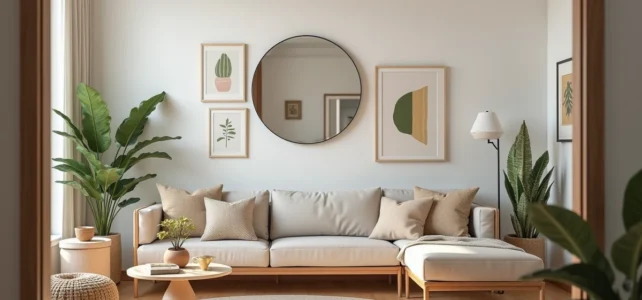
Changing the atmosphere of an interior doesn’t always require major renovations. A few well-chosen decor ideas are enough to alter the perception of a space, its brightness, and its character. The challenge is to know which interventions produce a visible effect relative to the effort invested.
1. Bold Color Accent Wall to Redefine a Living Room
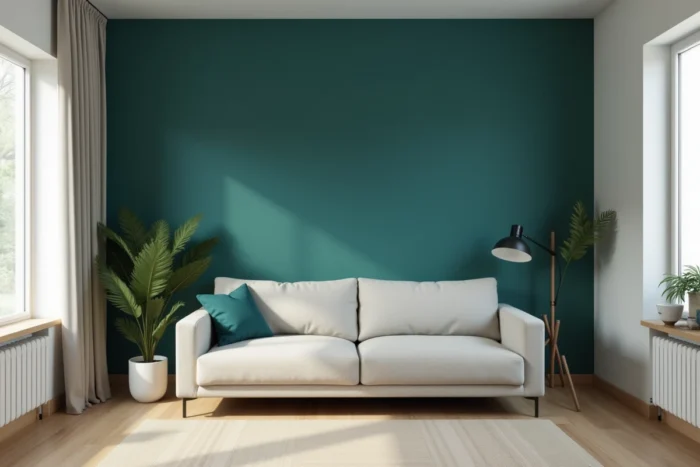
According to SeLoger, four colors dominate interior makeover projects in 2026: theatrical red, old rose, deep green, and rich blue. These shades can be applied to a single wall, a door, or woodwork to transform a room without altering the structure.
SoumissionRénovation confirms this trend with forest greens, espresso browns, and dark blues recommended for a single wall or kitchen cabinets. An all-white living room appears larger, but a bold accent wall gives it an immediate identity. Those looking for decor ideas on Seeks will find several color combinations suitable for each room.
2. Layering Textures on Living Room Textiles
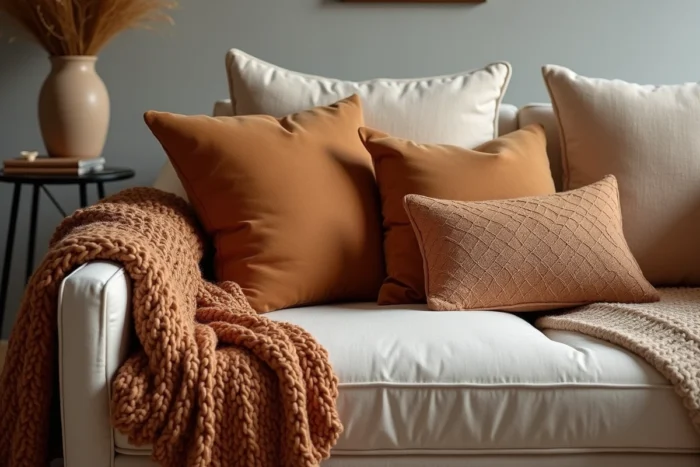
Remax Québec notes that ultra-minimalist smooth interiors are considered outdated in 2026. What replaces them: surfaces enriched with varied textures, matte finishes, and authentic materials.
Specifically, mixing a boucle wool throw, velvet cushions, and a linen blanket on the same sofa creates visual depth without needing to buy new furniture. The cost remains limited to textiles, and the effect changes the ambiance of the living room in just a few minutes.
3. Metal Wall Decor to Break the Monotony of a White Wall
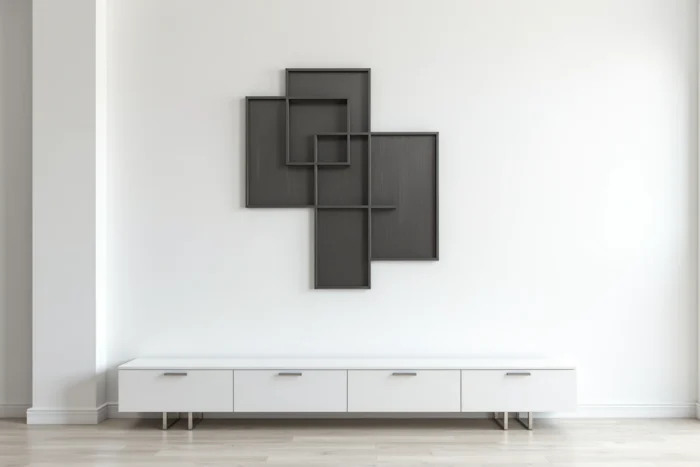
A room with bare walls appears unfinished. Metal wall decor (brass, wrought iron, brushed steel) adds dimension without weighing down the space. In contrast, an accumulation of photo frames produces the opposite effect: visual overload and difficulty maintaining alignment.
A single large metal piece placed above a sideboard or console is enough to structure an entire wall. Metal captures light and creates shadows that paint alone cannot produce.
4. Personal Photo Gallery with Mismatched Frames
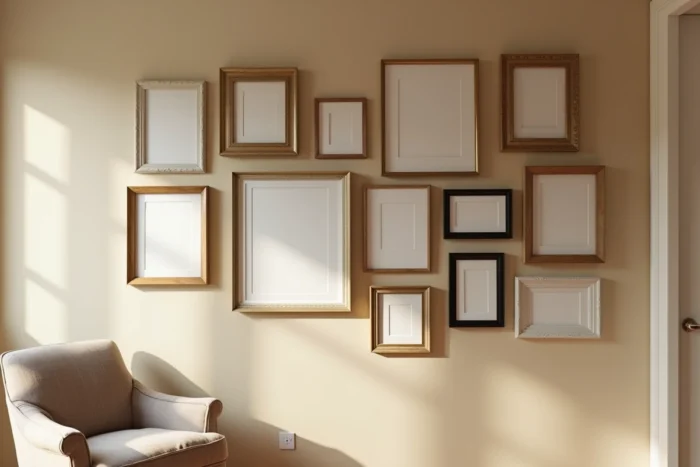
The wall gallery works as long as a simple rule is followed: vary the formats but maintain a coherent frame palette (a maximum of two or three materials, such as light wood and matte black).
Mixing posters, personal photos, and small original artworks adds character to a hallway or living room wall. Arranging the frames on the floor before drilling allows for testing the layout. This technique avoids unnecessary holes and risky repositioning.
5. Indirect Lighting with Accent Lamps to Modulate the Ambiance
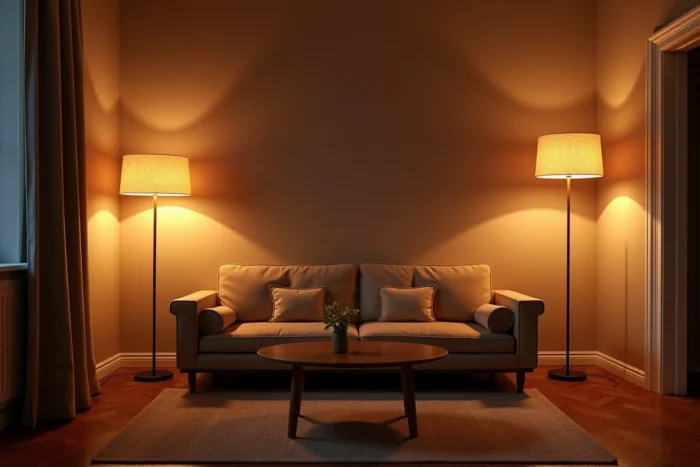
A central ceiling light provides uniform illumination, which flattens the volumes. Multiplying light sources (table lamp, reading lamp, low-voltage string lights, adjustable wall sconce) allows you to create areas of shadow and light that add depth to the room.
The table below compares the effect of each type of lighting on the ambiance:
| Type of Lighting | Effect on Space | Main Use Case |
|---|---|---|
| Central Ceiling Light | Uniform light, flattened volumes | Functional lighting (kitchen, office) |
| Table Lamp | Localized halo, cozy area | Living room, bedroom, reading nook |
| Low-Voltage String Lights | Warm ambiance, soft light | Bedroom, indoor terrace |
| Adjustable Wall Sconce | Highlighting an object or wall | Hallway, wall decoration |
6. Grouped Green Plants to Structure an Empty Corner
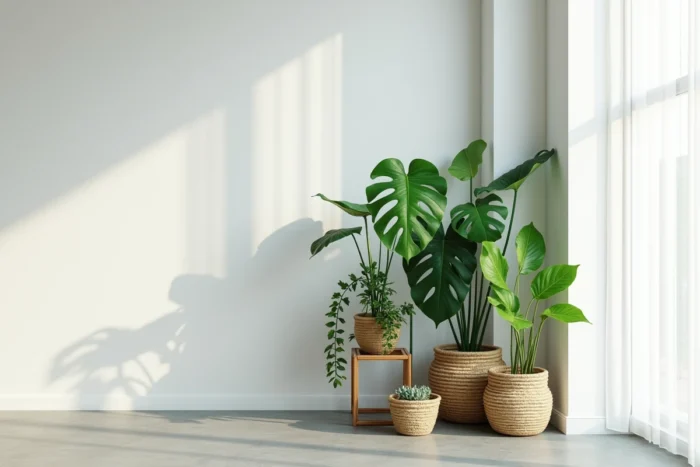
An isolated plant on a piece of furniture goes unnoticed. Grouping three to five plants of varying heights in the same corner creates a true focal point of greenery. The contrast between broad leaves (monstera) and fine leaves (fern) enhances the graphic dimension.
Pots made from raw materials (terracotta, wicker, wood) contribute to enriching the textures in the room, echoing the textiles of the sofa. This dual textile-plant effect distinguishes a decorated interior from a furnished one.
7. Glass Demijohn as a Standalone Decorative Piece
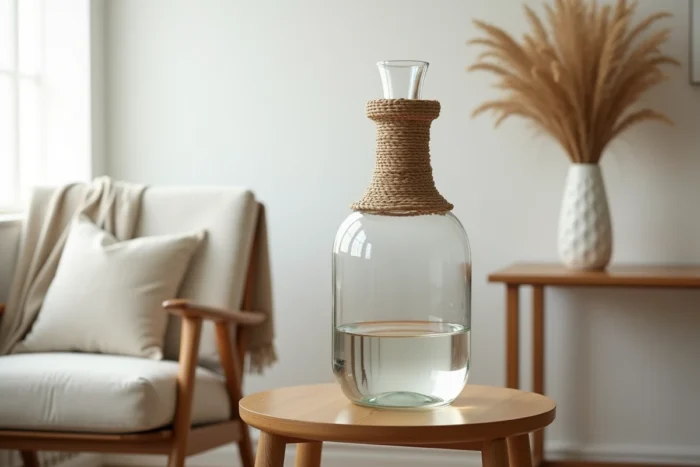
The demijohn regularly appears in French decor inspirations. Placed on the floor, empty or with a few dried branches, it adds volume without cluttering. Its transparency allows light to pass through and visually lightens the space.
In amber or green glass, it introduces a subtle touch of color that complements an accent wall without competing with it. Its maintenance is almost non-existent, making it a sustainable choice.
8. Large Mirror to Visually Expand a Room
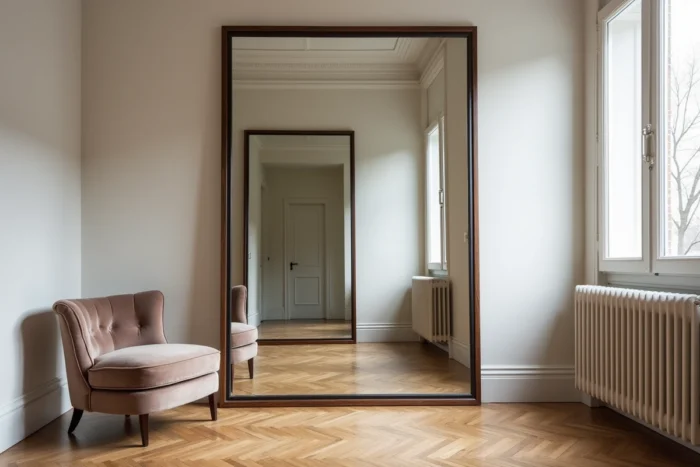
A mirror placed facing a source of natural light doubles the perceived brightness in the room. In a narrow entryway or a long living room, a large mirror corrects the perception of proportions.
The round shape softens the lines of a room with sharp angles. The rectangular shape, placed on the floor and slightly tilted against the wall, gives a loft effect that works particularly well in spaces with high ceilings.
9. Hexagonal Tiles as a Backsplash to Modernize a Kitchen
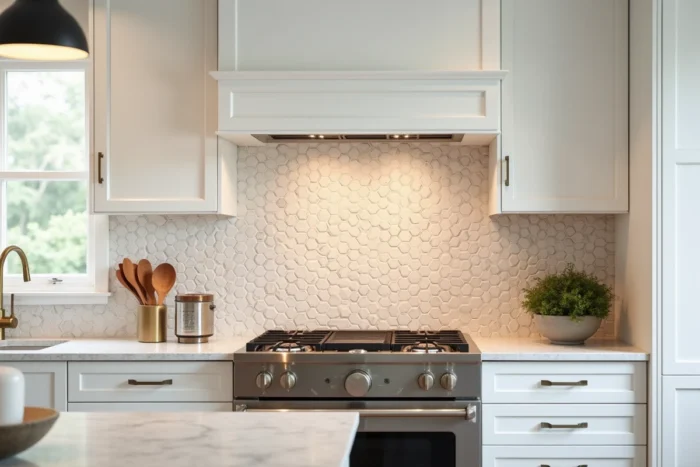
Hexagonal tiles create a geometric pattern that breaks away from the classic rectangular subway tile. Used as a kitchen backsplash or bathroom floor, it modernizes the space without requiring a complete renovation.
A gradient of shades (white, light gray, dark gray) on the same wall produces a dynamic visual effect. The installation remains accessible to DIY enthusiasts, as standard formats can be cut with common tools.
10. Reclaimed Wood Panel to Dress a Headboard
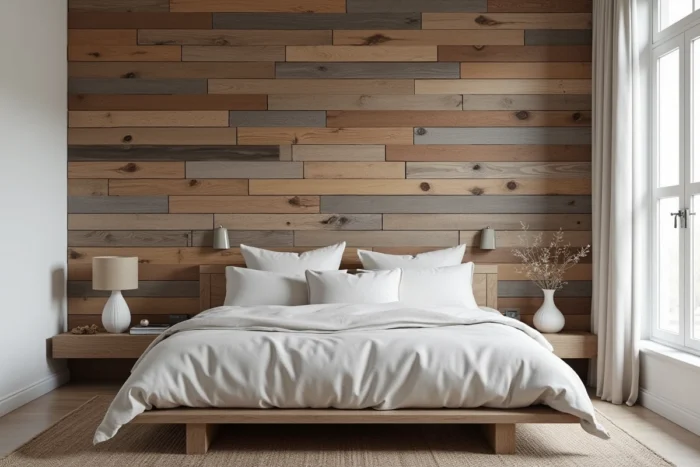
A headboard made from reclaimed planks transforms a bedroom in just a few hours. The raw wood, sanded but unvarnished, provides a warm texture that warms a wall painted in neutral tones.
Attaching the planks to a removable panel (rather than directly to the wall) allows for disassembly in case of moving. This approach aligns with the trend of authentic materials that, according to 2026 trend observations, are gradually replacing smooth and uniform surfaces.
Among these ten ideas, the colorful accent wall and the layering of textures are the two levers that most quickly change the perception of a space. The rest pertains to details that, when accumulated coherently, shift an interior from functional to personal.